BACK
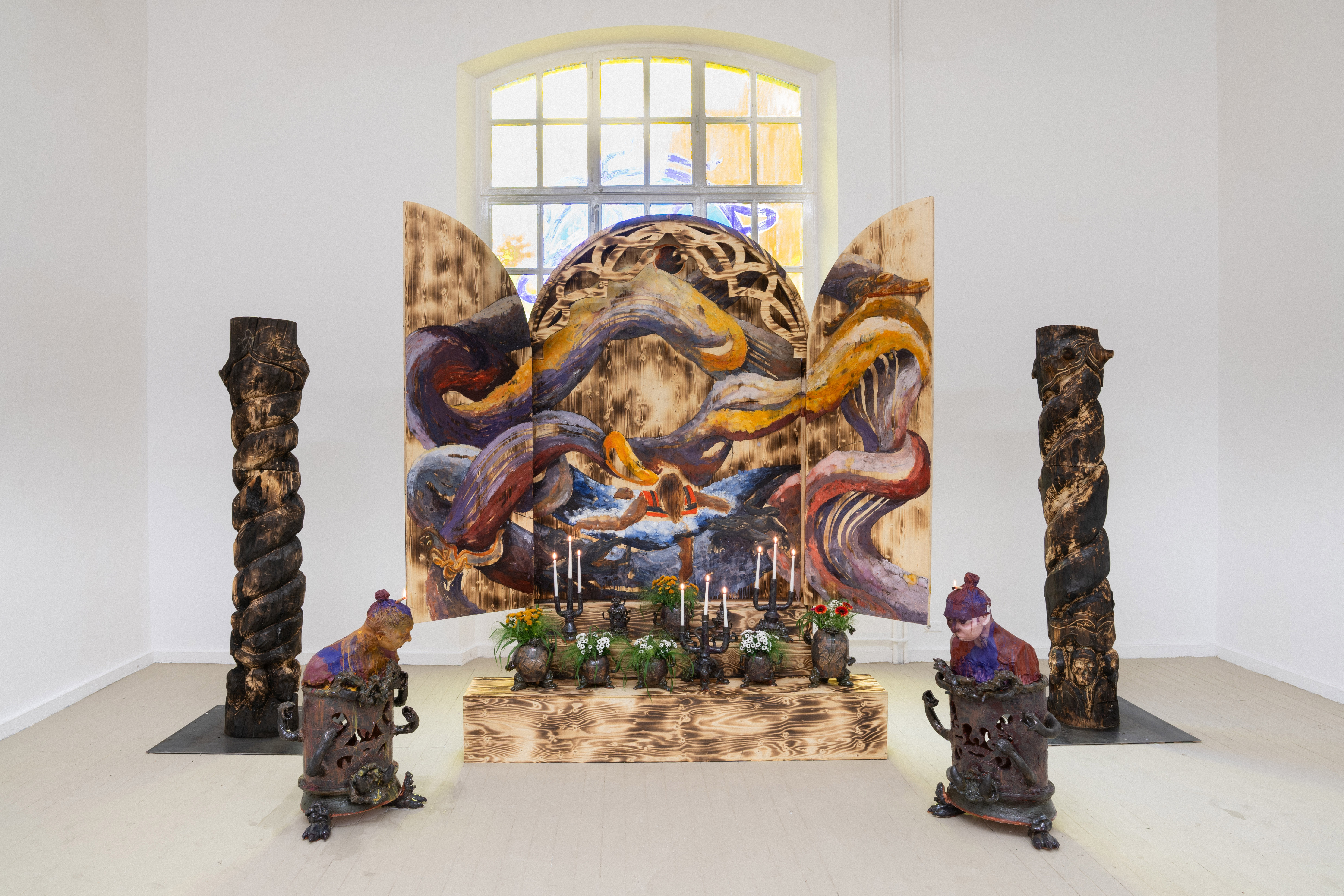
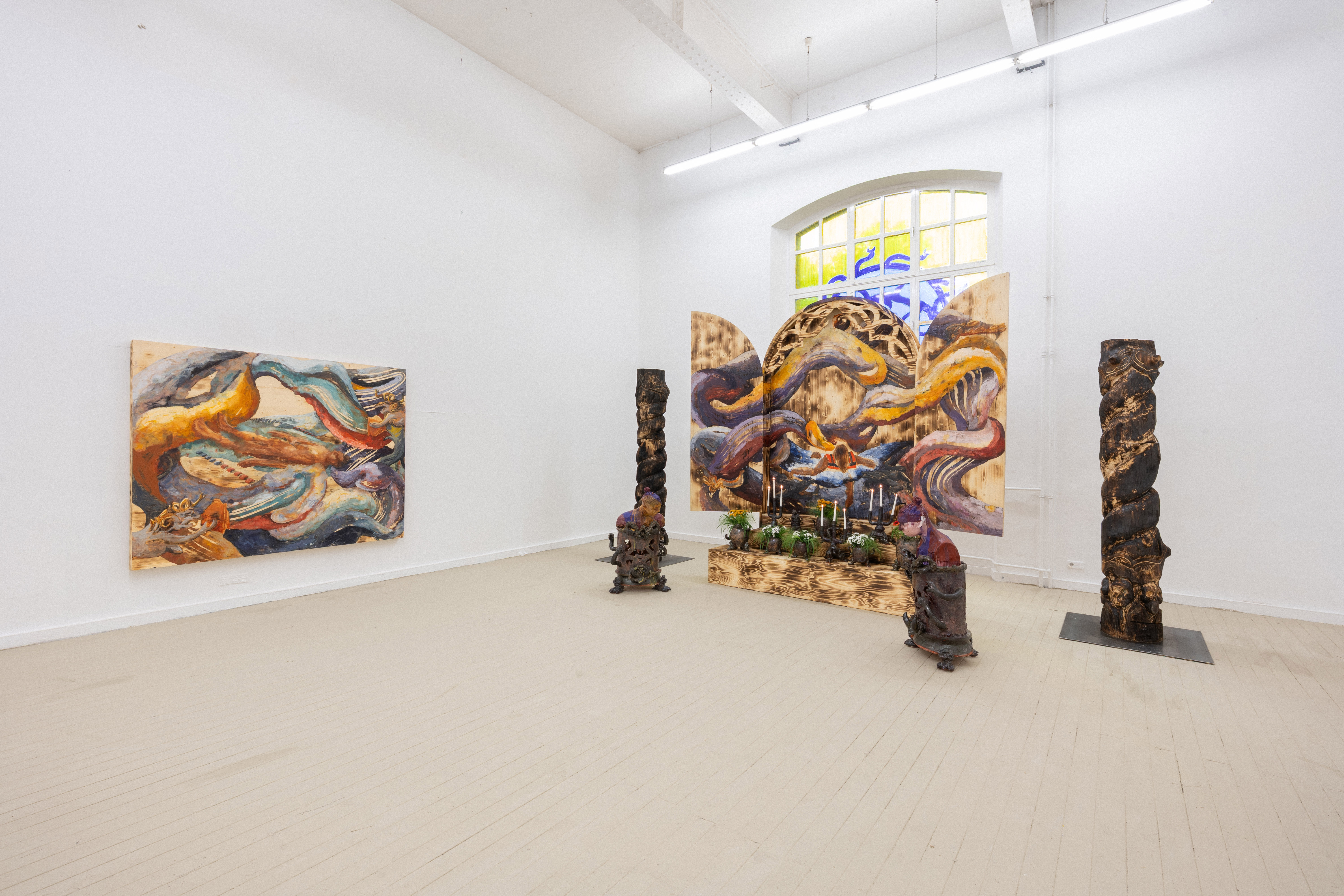
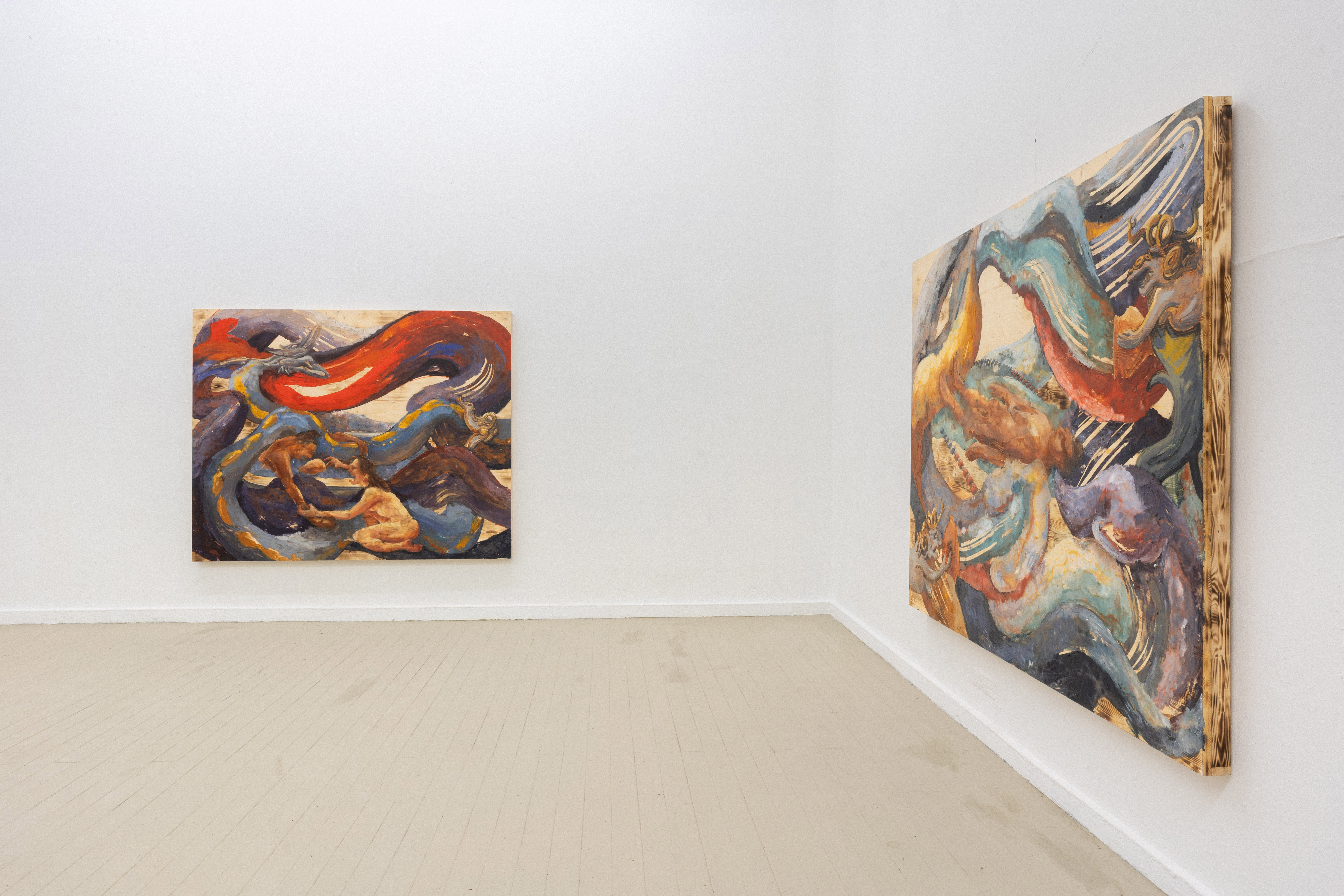
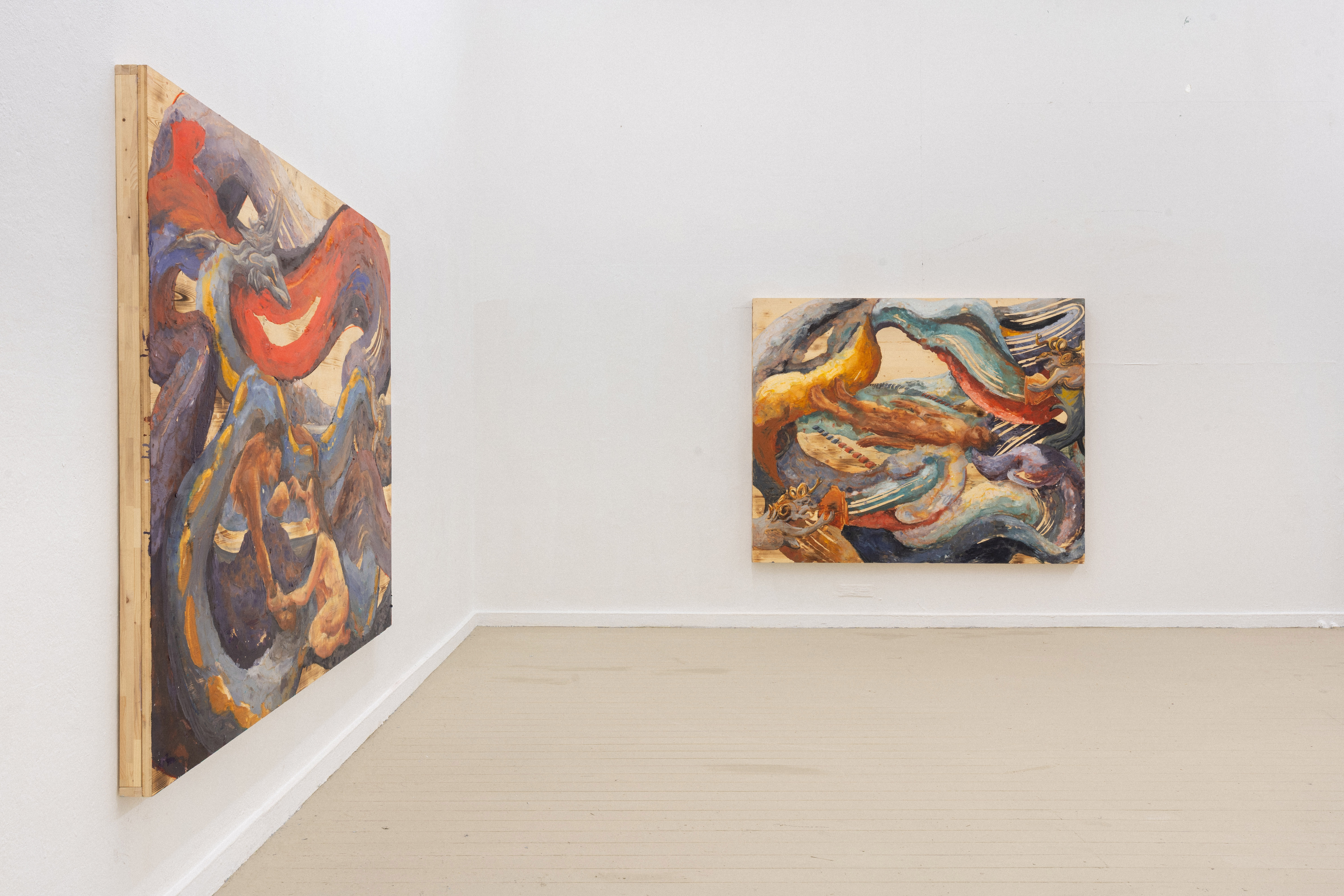
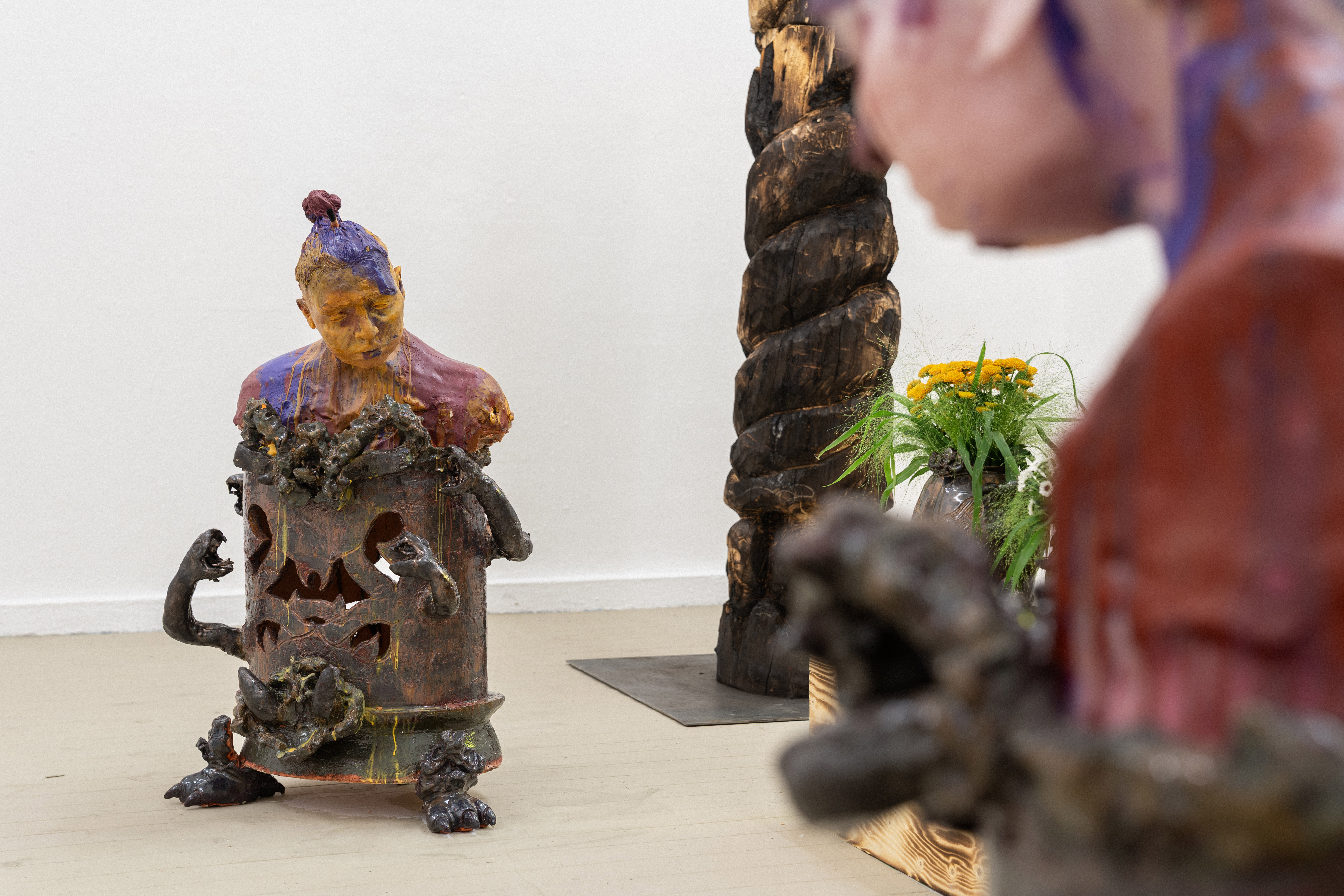
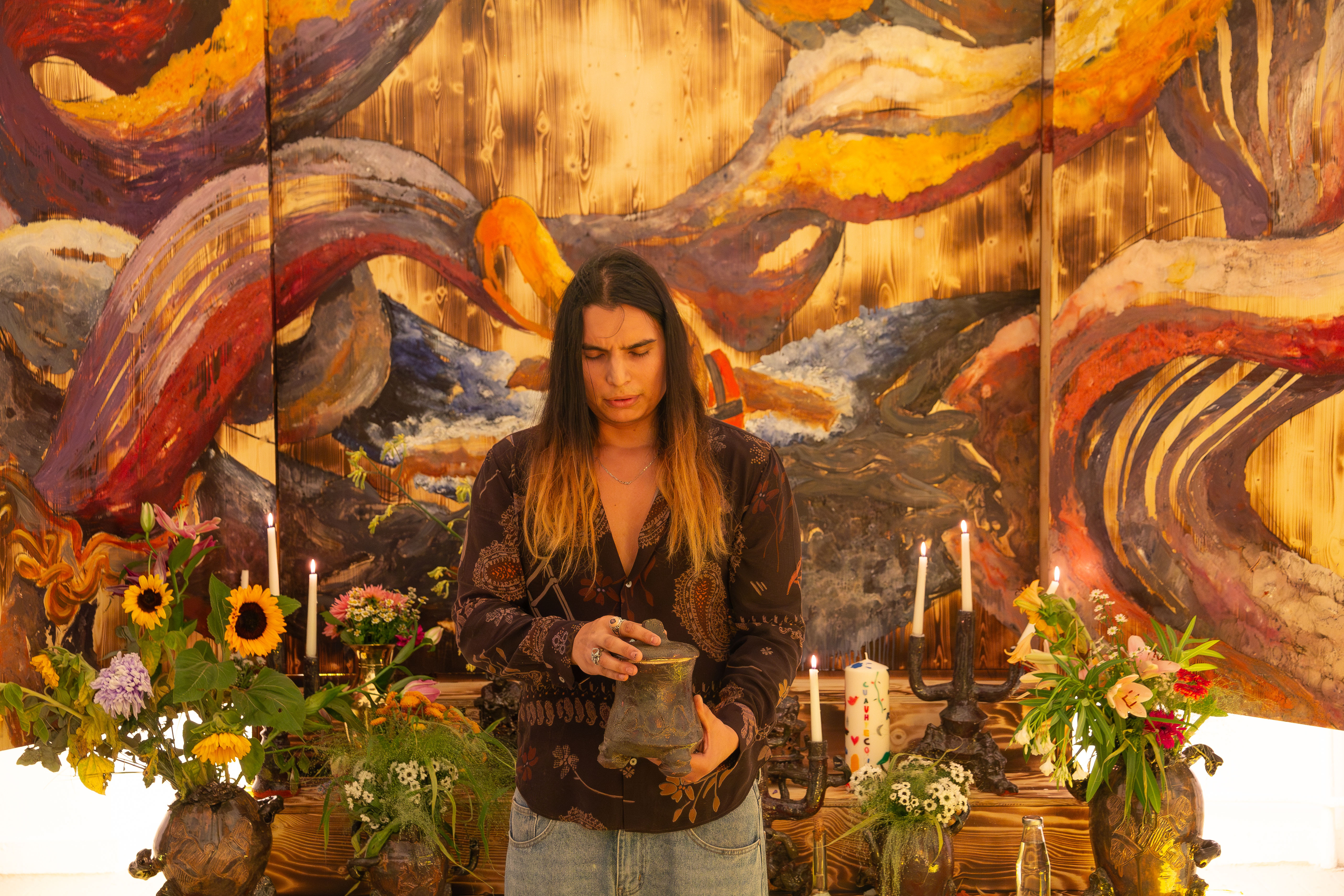
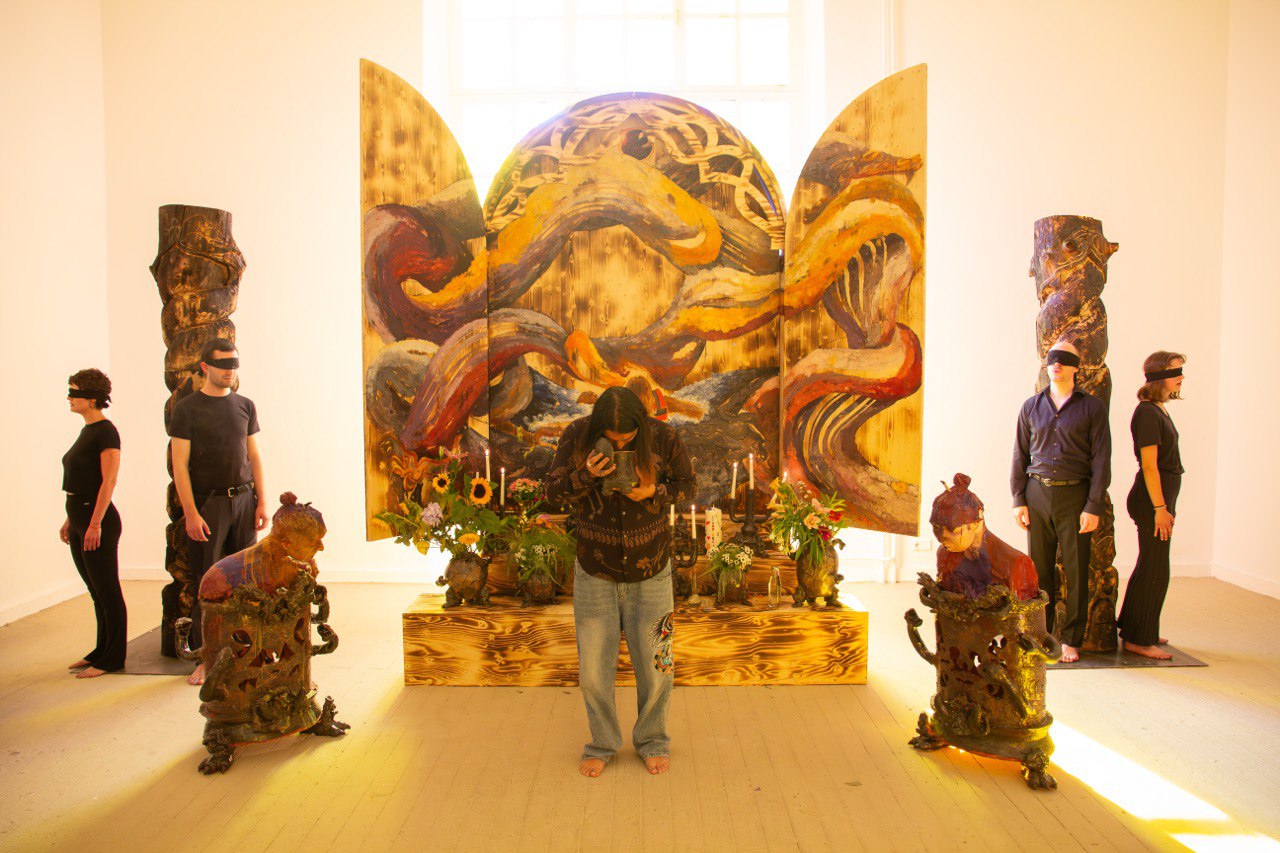
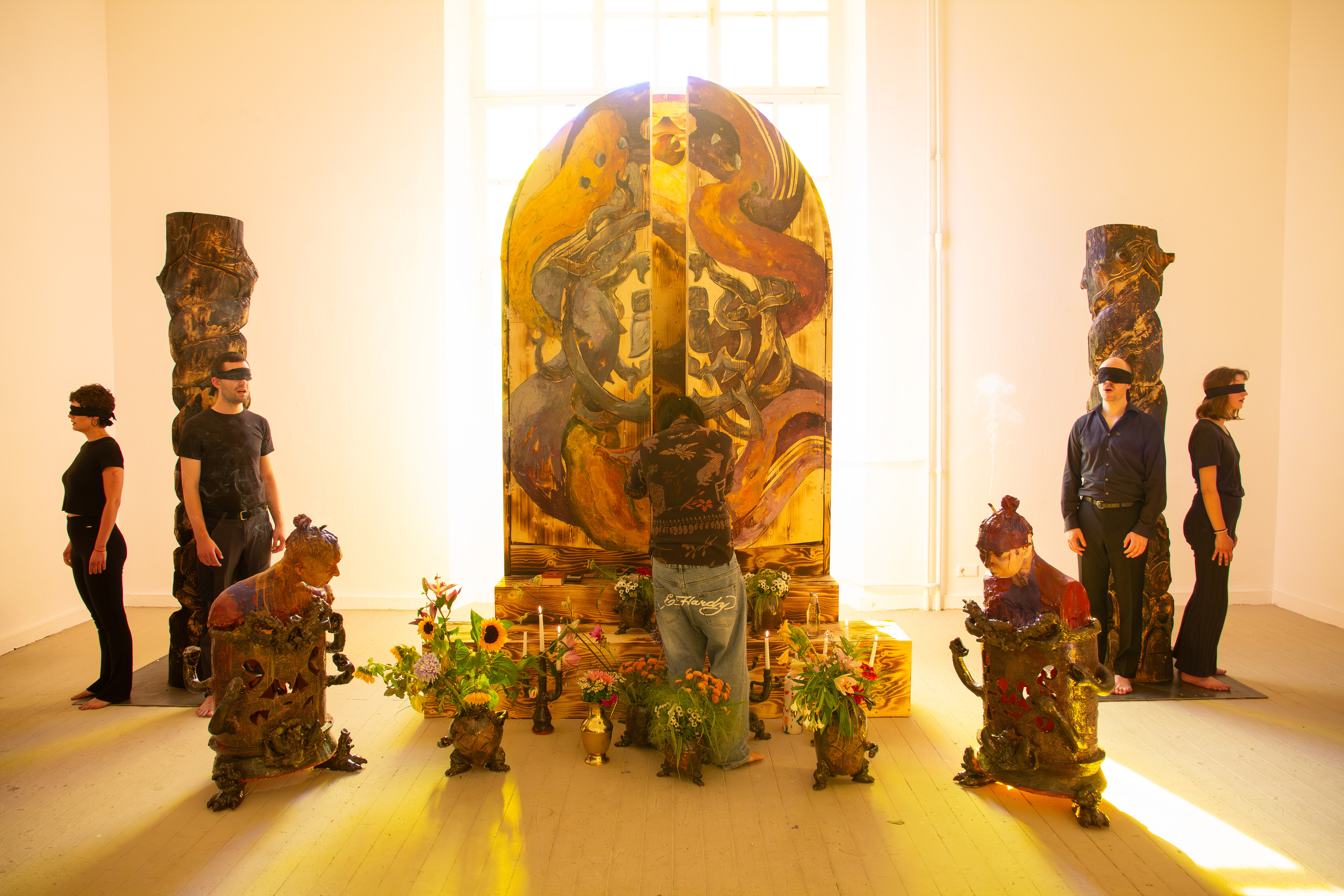
This Is the End emerged as a ritual of closure at the conclusion of Fabian Cuauhtecotzin’s studies at the Kunstakademie Düsseldorf. Conceived as a visual and performative altar, the project approaches the end not as disappearance, but as the rupture that precedes transformation: something must be relinquished for something else to emerge.
The work brings the apocalyptic imaginary of Christianity into contact with the cyclical temporality of ancient Maya cosmology, in which destruction signals transition rather than absolute collapse. Within the symbolic architecture of the Akademie—a temple of Western art—personal breakdown and collective history become inseparable.
Beeswax, wood, clay, and fire operate as active agents within this process. Wax accumulates and hardens like memory; ceramic vessels carry the marks of the kiln; fire destroys the image while simultaneously producing it. The materials become porous surfaces upon which violence, endurance, and renewal are inscribed.
At the centre of the project is the reclamation of the name Cuauhtecotzin, inherited from the artist’s grandfather and lost through generations of religious and bureaucratic assimilation. Through performance, the body becomes the site of this transition: not a return to an untouched origin, but an act of responsibility toward a lineage that survived its attempted erasure.
This Is the End is therefore less a conclusion than a threshold—a passage through fire from one identity into another.